

ADA showcases its activities in Latin America
ADA recently presented its activities in Latin America at various events, in particular at the Conferencia de Microfinanzas de América Central y el Caribe organised by the Central American and Caribbean Microfinance Network (REDCAMIF) and REDOMIF.
Forest and landscape restoration
Forestry Programme Manager Carla Palomares hosted a workshop on 'Impact finance for forest and landscape restoration: mechanisms, partnerships and replicable models for resilient communities'.
With ADA’s support, local financial institutions identify relevant business models for restoration and provide financial services to farmers and cooperatives for activities such as agroforestry, tree planting and climate-resilient farming while strengthening rural livelihoods.
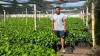
This financing is complemented by technical assistance to farmers by producer organisations and rural enterprises, helping them to adopt restoration practices and access markets. ASOCUCH and Aldea Global, S.A. showcased coffee agroforestry finance that links productivity, land restoration and climate adaptation.
Measurable environmental and climate impact data
ICFI (Inclusive Climate Finance Initiative) Head of Programme Wendy Medrano-Lazo spoke on a panel 'From data to impact: Building the regional standard for inclusive finance.' In the context of an app developed by REDCAMIF and ADA for collecting and analysing data at institutional and client level, she stressed the importance of investing in impact data systems that integrate environmental and climate variables in the inclusive finance sector. This would enable development actors to better understand client vulnerability, climate exposure and resilience needs. More broadly, this data could also be used to ensure that inclusive finance contributes to more sustainable development and poverty reduction.
Operational taxonomy for climate resilience finance
ADA’s Director of Programmes Bénédicte Godefroid presented an operational taxonomy for climate resilience finance in Central America and the Dominican Republic. The taxonomy is a classification system which can be used to accelerate regional climate adaptation funding. Financial institutions, investors, companies, cooperatives, development agencies and public policymakers can use the taxonomy to guide them in making investments that strengthen resilience against climate change. The taxonomy was developed in the context of the ICFI programme with the support of YAPU Solutions.
Investment advice
ADA prospects, analyses and selects potential investees for the Luxembourgish investment vehicles LMDF (Luxembourg Microfinance and Development Fund) and FIT (Financing Innovation Tool).
The REDCAMIF conference enabled ADA’s investment advisory team to showcase their activities and meet existing and potential new investees in the region. For example, they held a workshop with selected microfinance institutions and investors to present the new Impact Linked Portfolio Facility, a mechanism to incentivize the deployment of high impact credit products that will be implemented later this year.
Inclusive insurance
Bénédicte Godefroid also spoke at the second Latin American and Caribbean Congress on inclusive insurance in the Dominican Republic co-organised by SERINSA and the MiN. She emphasised that inclusive insurance is one of the most efficient tools for reducing investment risks and for strengthening the resilience of smallholder farmers and micro-entrepreneurs.
ADA’s experience with SSNUP, the Smallholder SustaiNability Upscaling Programme, has shown that inclusive insurance reaches its full potential when it forms part of a broader, trust-based system and engages all stakeholders from investors to vulnerable populations.
FAR agricultural and climate finance training
The conference was preceded by the second Latin American edition of the agricultural and climate finance training (FAR) organised by ADA and the FAO, that aims to enable financial professionals to better serve smallholder farmers in the region in the context of climate change.
Over two days, 30 participants representing 10 organisations explored topics such as green finance and environmental and social risk management. The training also included field visits to a microfinance institution that offers green loans for the agricultural sector and to a cocoa farm to understand the financial support needed throughout the agricultural production process from cocoa beans to chocolate. Specialists from organisations including FAO, INCAE Business School, Cerise+SPTF and YAPU Solutions shared their expertise during the training.