

When economic opportunities open a pathway to autonomy

In Senegal’s Groundnut Basin, three women’s groups supported through ADA’s Young People and Green Jobs programme not only developed new income-generating activities but have also demonstrated a strong capacity for ownership and initiative. Early field observations provide valuable insights into the necessary conditions for encouraging greater autonomy.
A context shaped by limited opportunities
The Bambey department faces many of the challenges typical of rural areas. Agriculture remains the main source of livelihoods and relies largely on rain-fed crops such as millet, sorghum and groundnuts, making it highly vulnerable to climatic conditions. At the same time, land overexploitation and soil erosion continue to undermine productivity and threaten the sustainable management of natural resources. Against this backdrop of limited economic prospects, there is a frequent exodus of young people from rural areas.
It is within this context that three women’s groups in Ngarasse, Rintabé and Diourene, representing a total of 93 members, including 48 young people, joined ADA’s Youth and Green Jobs programme. The programme aims to create new economic opportunities by integrating participants into the organic hibiscus (bissap) value chain.
ADA acts as a catalyst by coordinating the activities of Baobab des Saveurs, a Senegalese producer of cosmetics based on West African plants, which provides technical assistance and market access to the groups, and the Concree incubator, which provides entrepreneurial support.
Combining technical training with entrepreneurial group development
The programme includes two complementary components: technical training in good practices for cultivating hibiscus and processing it for the cosmetics sector and entrepreneurial support covering financial management, the use of a digital accounting solution, marketing and the diversification of income-generating activities.
Within this framework, training in soap-making techniques was introduced with a specific objective in mind. Unlike seasonal agricultural production, soap manufacturing can generate income throughout the year, reducing dependence on climatic cycles.
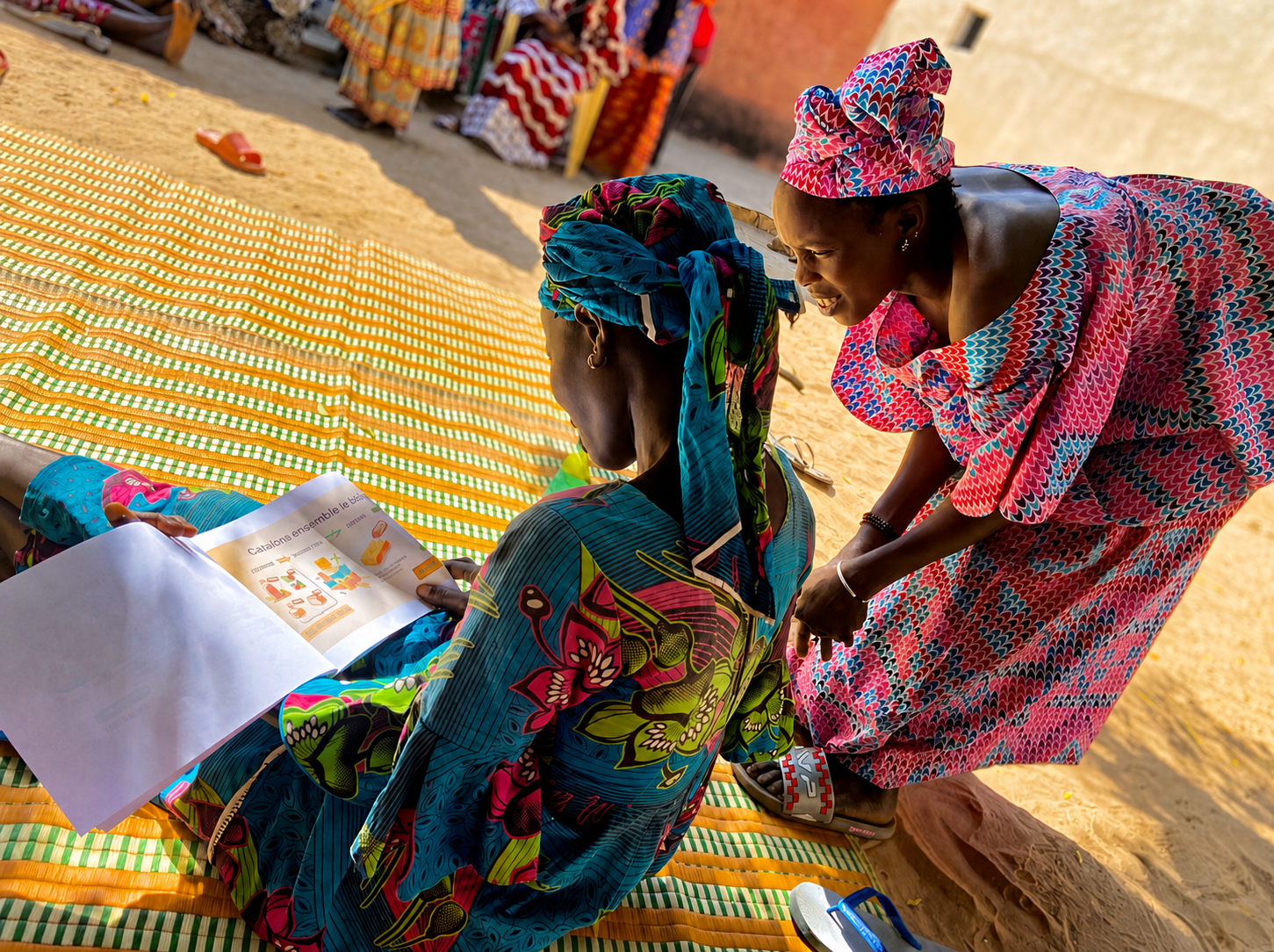
In February, 142 members from the three women’s groups, 73% of whom were young, were trained in the production of solid soaps, liquid detergents and bleach. Products made during this initial training session were sold locally, generating direct income for the groups.
The groups are also encouraged to adopt circular economy practices, including the collection and reuse of product containers.
Faster ownership than expected
Following the first soap-making training, the women’s group in Rintabé launched and completed its own soap production entirely on their own, using Nguediane (Anogeissus leiocarpa, commonly known as the African Birch), without any external technical assistance.
The group enlisted a local student to design labels for its soap products and successfully secured a first customer in Dakar. This spontaneous initiative illustrates the dynamism and adaptability of the groups, which the programme seeks to strengthen and promote.
Young people keen to join the groups
In Ngarasse, a positive intergenerational dynamic has emerged. The group was initially mainly composed of older women. Following the first hibiscus harvest and the soap-making training, young people began expressing interest in joining the group. They were attracted both by the prospect of regular income through soap production and by the economic opportunities linked to hibiscus cultivation. This renewed interest strengthens the long-term sustainability of the group while helping to spread knowledge and skills throughout the wider community.
These experiences confirm that the relevance of a proposed economic opportunity is a critical factor. Activities that respond to real needs - whether by providing more regular income, strengthening resilience to climate change or creating value from local resources - can create the conditions for genuine and lasting autonomy.