Image
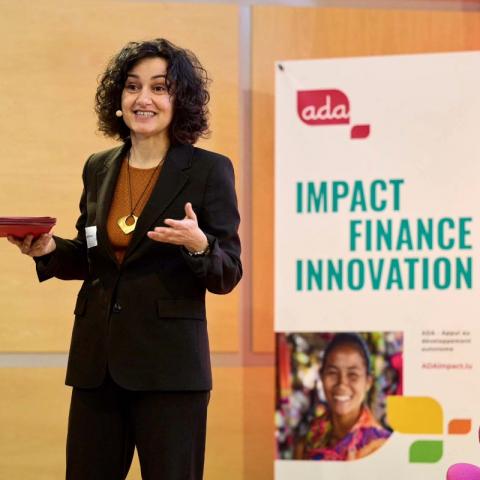



A worn savings booklet, held in a woman’s hands. Inside, a record of years of contributions that helped fund her son’s education - now the director of the local branch of his village cooperative in Kenya. This story was chosen by Laura Foschi, Executive Director of ADA, to open the presentation of the organisation’s new strategy at an event on “Impact Finance for Vulnerable Populations”, before a full auditorium at Banque de Luxembourg on Monday, 20 April 2026.
© Eric Devillet
“This is the first time we have set ourselves a public, measurable target: to support 1.5 million vulnerable people in building sustainable economic resilience by 2030.”
— Laura Foschi, Executive Director of ADA
An ambitious goal, based on tangible experience —over the past four years alone, ADA has supported more than 900,000 beneficiaries in the field.
To reach this objective, the NGO relies on three complementary levers: empowering its local partners through technical expertise; facilitating access to finance via Luxembourgish, European and international investment funds and continuous learning from its field experience.
A simple conviction lies at the heart of ADA’s approach: impact cannot be achieved in isolation. Accordingly, the organisation places local economic actors at the centre of its work. Inclusive finance institutions, producer cooperatives, SMEs and training organisations all contribute to building resilient local ecosystems that serve vulnerable populations.
Two field partners travelled from Guatemala to share their experience in working with this model. In their country, more than 50% of the population lives below the poverty line, with vulnerability taking many forms - economic, climatic, educational and social.
© Eric Devillet
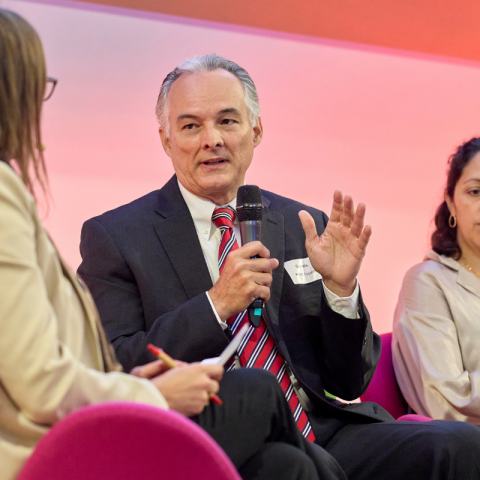
Edgardo Perez explained how Fundación Génesis Empresarial, where he serves as CEO, supports entrepreneurs and their families.
“With more than ten years of experience, we can confidently say that within seven years, we can help lift a family out of extreme poverty.”
— Edgardo Perez, CEO of Fundación Génesis Empresarial
To achieve this, the institution provides both financial and non-financial services aimed at improving income, living conditions as well as access to education and healthcare. Today, Génesis supports over 500,000 clients, 72% of whom are women. In partnership with ADA, it has also developed a climate resilience index to better tailor its products to the challenges of climate change.
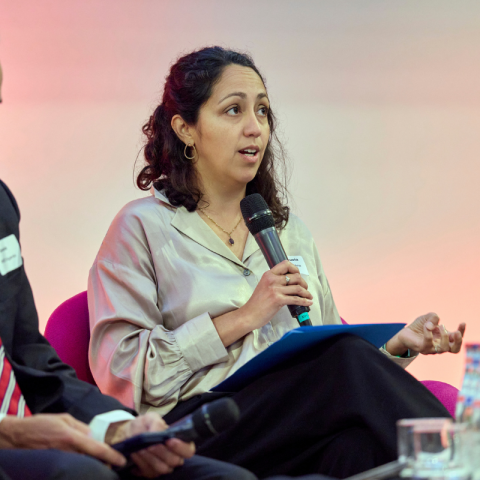
For her part, Ana Gabriela Chinchilla, Director of Strategic Partnerships at Alterna, works with impact-driven SMEs
“Vulnerability results from a complex system of interlinked layers. The SMEs we support can themselves be considered vulnerable,” she noted.
— Ana Gabriela Chinchilla, Director of Strategic Partnerships at Alterna.
© Eric Devillet
Yet these small businesses, led by local entrepreneurs, are often best placed to understand the needs of their communities. Over the past fifteen years, Alterna has supported more than 4,000 companies across Central America, reaching over 6 million people by improving access to maternal healthcare, clean energy, clean water and training. Supported by ADA, Alterna established Devela Capital, a financing vehicle dedicated to businesses with a social and environmental impact. Since 2018, the fund has contributed to financing more than 88 companies.
To enable more partners like Génesis and Alterna to emerge and grow, ADA relies on a robust financing model, combining public support with private investment.
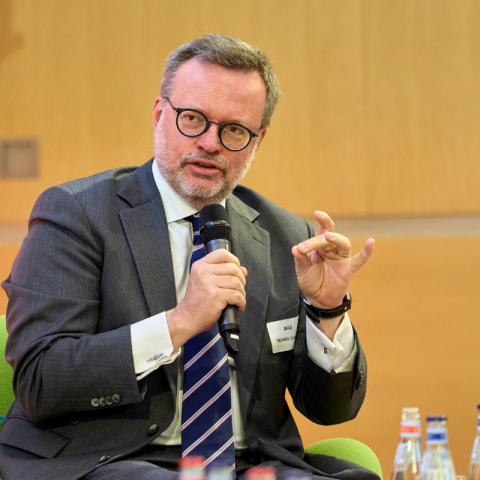
In a challenging global context where official development assistance budgets have declined by more than 20%, Georges Ternes, Director General for Development Cooperation, highlighted that public aid alone is no longer sufficient. It is now essential to leverage the private sector to maximise the impact of public funds. “And the figures speak for themselves,” he added.
© Eric Devillet
“For certain projects, one euro of public funding can generate up to twenty euros in impact investment.”
— Georges Ternes, Director General for Development Cooperation
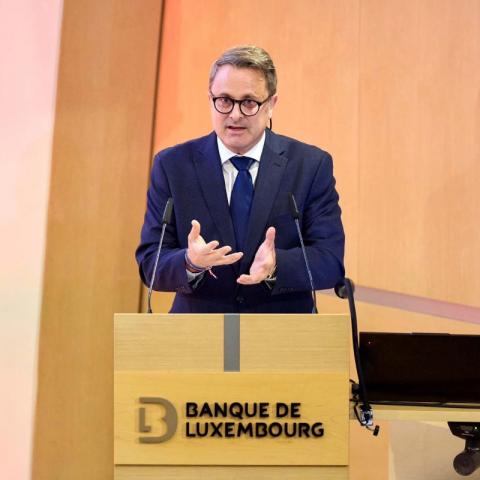
In this spirit, Xavier Bettel, Deputy Prime Minister, Minister for Foreign Affairs and Foreign Trade, and Minister for Development Cooperation and Humanitarian Affairs, confirmed Luxembourg’s continued commitment to ADA from 2026 to 2030. This renewed partnership includes a contribution of €48.25 million, representing nearly half of the total budget of the strategic plan.
“By backing an organisation that operates in the field and works with impact investors - while leveraging Luxembourg’s financial expertise - we strengthen the leverage effect of public funds and contribute to advancing impact finance for vulnerable populations.”
— Xavier Bettel, Deputy Prime Minister, Minister for Foreign Affairs and Foreign Trade, and Minister for Development Cooperation and Humanitarian Affairs
© Eric Devillet
In countries such as Luxembourg, access to financial services is largely taken for granted. Elsewhere, it remains a major challenge. Beyond public support, the private sector has a critical role to play, as highlighted by Nicole Dochen, Vice-President of ADA and Member of the Executive Committee of the Banque de Luxembourg. Private actors could share their expertise, financing capacity and power to influence to help scale innovative solutions and further extend the NGO’s impact.