Image



Agriculture in Togo remains heavily dependent on rainfall. In the context of climate change, this reliance heightens vulnerability and has an adverse effect on agricultural productivity.
In response to this challenge, the microfinance institution (MFI) network, FUCEC-TOGO and ADA launched an initiative in the Plateaux region to develop a “climate-resilient agriculture” package, combining financial and non-financial services tailored to smallholders.
To design a support methodology aligned with farmers’ needs, an initial project phase was conducted with approximately twenty participants.
The climate-resilient agriculture package for maize cultivation included the following components:
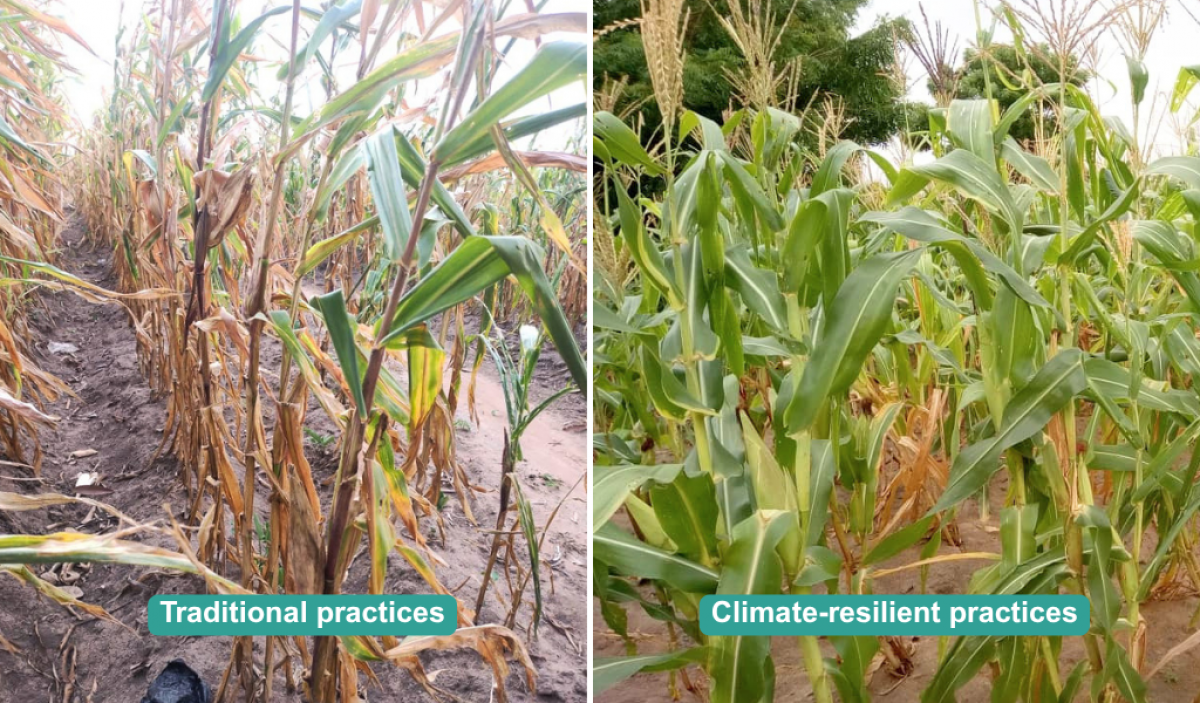
To assess the effectiveness of this support, participants applied the promoted practices to part of their plots, while the remaining land continued to be cultivated using traditional methods.
The findings highlight a significant increase in yields, particularly for maize. Plots benefiting from climate-resilient practices recorded an average yield of approximately 3.2 tonnes per hectare—nearly three times higher than the 1.2 tonnes per hectare observed on plots using conventional methods.
Other positive outcomes were also observed, including improved soil quality, which leads to better yields in subsequent crops, and greater resilience of the plots to periods of drought.
To evaluate the uptake of the resilient production practices introduced as part of the project, ADA conducted a survey among participants. The survey sought to better understand implementation challenges, particularly regarding the use of certified seeds, the production and use of organic compost, the addition of phosphate to organic fertiliser, ridging and mulching, and light mechanisation.
Participants identified the use of certified seeds and organic compost as the most accessible practices. However, compost production remains more challenging due to limited access to organic inputs (such as animal manure) and significant labour requirements.
Labour shortages were also cited as a key constraint affecting the implementation of ridging and mulching, both of which require additional physical effort.
.
The most satisfying outcome reported by participants was the increase in yields following the adoption of resilient practices: 90% of farmers reported significantly higher yields on resilient plots compared to those managed using traditional approaches.
“Climate-resilient agriculture has produced much higher yields than traditional farming.”
— Pilot project participant
Following this promising initial phase, ADA and FUCEC-TOGO aim to address the identified constraints to scale up the support methodology. In 2026, more than 200 smallholders already expressed interest in receiving the climate-resilient agriculture package. In collaboration with the FECECAM-BENIN MFI network, ADA is also replicating the intervention model in Benin, adapting it to the local context.
This project lays a strong foundation for helping smallholders achieve long-term resilience. In the medium term, however, a key challenge remains: ensuring adequate access to markets, which is essential for turning these gains into sustainable economic opportunities.