

Agroforestry finance for smallholder farmers in Rwanda
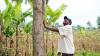
Together with LuxDev, the microfinance institution Inkunga Finance Plc and the research organisation CIFOR-ICRAF, ADA set up a project in Rwanda to assess the feasibility of financing agroforestry activities of smallholder farmers and SMEs. The project demonstrated that well-designed financial products combined with technical assistance can successfully support agroforestry adoption while maintaining strong loan repayment rates. ADA carried out a case study on the project to distil the lessons learnt and the requirements for replicating and scaling up this approach.
For smallholder farmers, agroforestry can increase productivity, diversify crops and income, improve food security and strengthen resilience to climatic and economic shocks. By combining farming with the protection of natural resources, agroforestry also helps to enhance biodiversity, support climate change adaptation and restore degraded land by improving soil fertility and water retention. In addition, agroforestry supports rural development by creating jobs, encouraging entrepreneurship and promoting women’s economic participation.
Together with the microfinance institution Inkunga Finance Plc and the research organization CIFOR-ICRAF, ADA set up a project in Rwanda to assess the potential benefits of agroforestry for smallholder farmers and SMEs. The project:
- Supported the local microfinance institution Inkunga Finance in gaining experience and understanding of agroforestry as a promising investment opportunity.
- Enabled Inkunga to develop tailored agroforestry loan products with flexible conditions such as adapted repayment options and loan amounts that are aligned with farmers’ cash-flow cycles and the long timelines associated with tree planting and agroforestry.
- Trained farmers in sustainable agroforestry practices, including tree species selection, farm design and effective ecosystem management.
- encouraged the development of local value chains, improved access to good quality seedlings and strengthened the local agroforestry sector.
A flexible, step-by-step approach
The project followed a phased approach. It began with building knowledge between Inkunga and CIFOR-ICRAF based on field research and stakeholder input to assess seedling availability and identify agroforestry models (fruit trees or trees providing timber, fodder and firewood), that are both environmentally suitable and economically viable for smallholder farmers.
The second phase focused on co-developing and piloting a financial product. Farmers were involved early on to ensure the solutions matched their needs while technical training helped them to adopt agroforestry practices. The final phase aimed at scaling and strengthening the agroforestry finance model. Overall, this step-by-step approach allowed the project team to test and adapt, ensuring that the agroforestry solutions were effective, sustainable and accepted by farmers and their communities.
Results and outlook
149 farmers, 55% of whom are women, benefited from around USD 70,000 in agroforestry loans in total, enabling the farmers to plant more than 21,000 trees. Early results show low credit risk and a high tree survival rate of 82%. These positive results enabled Inkunga Finance to obtain a loan from the Financing Innovation Tool (FIT) to scale agroforestry adoption among its smallholder clients.
The project is in a broader learning and consolidation phase until the end of 2026. It is financially and strategically supported by the Luxembourgish development cooperation agency LuxDev with a focus on improving the agroforestry financing model, better integrating technical support within Inkunga Finance as well as on strengthening planning, monitoring and coordination. Opportunities to continue and expand the project, potentially to new regions, are being explored.
Lessons learned for other agroforestry finance projects
The project demonstrated that well-designed financial products combined with technical assistance can successfully support agroforestry adoption while maintaining strong loan repayment rates. ADA conducted a case study on the project to distil the lessons learnt and the requirements for replicating and scaling up this approach.
The study found that the agroforestry financial products need to respond to farmers’ realities, align with the financial institutions’ operational capacity and benefit from a supportive policy framework to be impactful. In addition, the study gives specific recommendations for microfinance institutions as well as for donors and supporting organisations, provides technical advice and identifies best practices for ensuring the sustainability of agroforestry.